


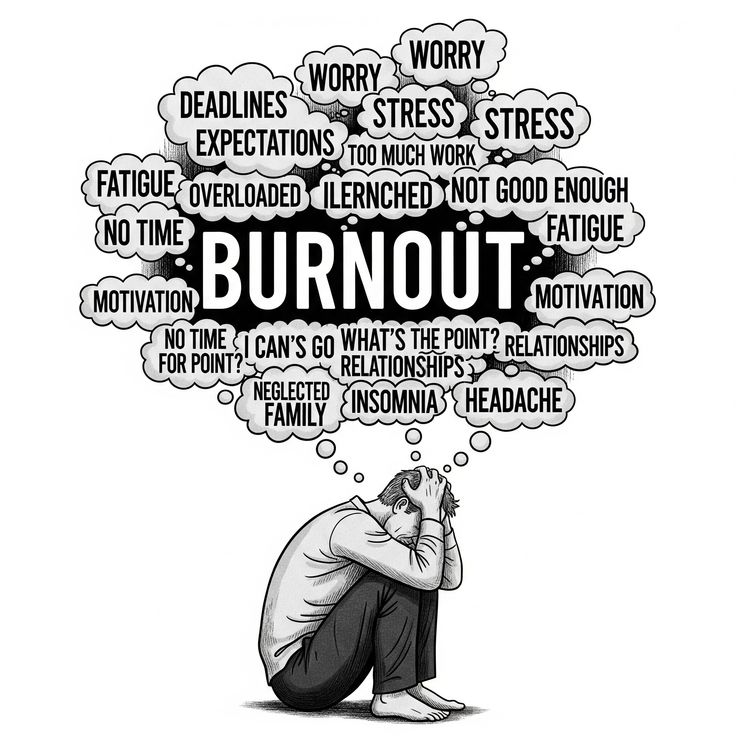
Schools and universities are meant to help students grow, develop new skills and prepare for the future. But what happens when the pressure to succeed becomes overwhelming? Imagine spending hours studying for an examination, completing assignments late at night and constantly worrying about your grades. Despite all that effort, you still feel like you are not doing enough. For many students, this is not an occasional experience but a daily reality. Throughout their education, students face different academic challenges, from primary school examinations to high school tests and university projects. While these experiences encourage growth, the constant pressure to succeed can become exhausting. Over time, this pressure can lead to academic burnout, affecting students’ mental, physical and emotional well-being.
The Mental Health Cost Of Academic Stress
Firstly, academic pressure can take a serious toll on students’ mental health. Schoolwork can become overwhelming when students feel that their worth depends entirely on their grades, test scores and academic achievements. The pressure becomes even greater for those dealing with learning difficulties, heavy workloads, challenging examinations or financial struggles at home. For example, a student who struggles to keep up with assignments may begin to feel like a failure, even when they are genuinely trying their best. Constantly worrying about academic performance can also create feelings of anxiety, sadness and hopelessness. Over time, these experiences may contribute to more serious mental health challenges, including depression.

The Physical Toll of Constant Pressure
Secondly, academic burnout can affect students physically. Long study hours, late nights and irregular eating habits often leave students feeling exhausted. Many sacrifice sleep to complete assignments or prepare for examinations, forgetting that their bodies also need rest. Some students even struggle to relax because they constantly think about unfinished work. Skipping meals, sitting for hours without movement and getting insufficient sleep can contribute to headaches, fatigue and poor concentration. Eventually, these unhealthy habits can make studying even more difficult. Instead of improving their academic performance, students risk damaging their physical well-being.

Guilt, Comparison and Feeling Drained
Lastly, academic burnout can have a significant emotional impact. Some students feel guilty whenever they take a break, enjoy themselves or spend time doing something unrelated to schoolwork. They begin to associate resting with laziness rather than recognising it as an important part of maintaining their well-being. Social comparison can make things even worse. Students often compare their academic performance with classmates who appear to manage everything effortlessly. This can create feelings of inadequacy and make them question their abilities.As the pressure continues, students may lose motivation and confidence. Studying can start to feel like an exhausting responsibility rather than a meaningful opportunity to learn and grow. They may also lose interest in hobbies and activities that once made them happy.

Conclusion
Academic success should never come at the expense of a student’s well-being. Although education plays an important role in shaping the future, constant academic pressure can leave students mentally exhausted, physically drained and emotionally disconnected. Students should not have to sacrifice their health just to prove that they are working hard enough. Schools and universities must recognise that success is not measured by grades alone. After all, a healthy student is in a much better position to learn, grow and succeed.
READ MORE ABOUT ACADEMIC BURNOUT AND MENTAL HEALTHhttps://psychologia.pelnus.ac.id/index.php/Psychologia/article/view/108
BY; NANA MURUNGI.